


Blog Post
This post was originally published on July 9, 2026, as an article on Harold’s LinkedIn profile. You can read and leave comments here.
For cannabis infused edibles to deliver desired effects consistently, it’s crucial that we understand the tools to measure those effects.
This brings us closer to the traditional pharmaceutical industry, where the holy grail of drug development relies on two pillars: Pharmacokinetics (PK) and Pharmacodynamics (PD). To truly master the cannabis experience, we must stop assuming and start measuring. In this article, I’ll walk through key information every product maker needs to know about PK and PD research methods.
The difference between PK and PD
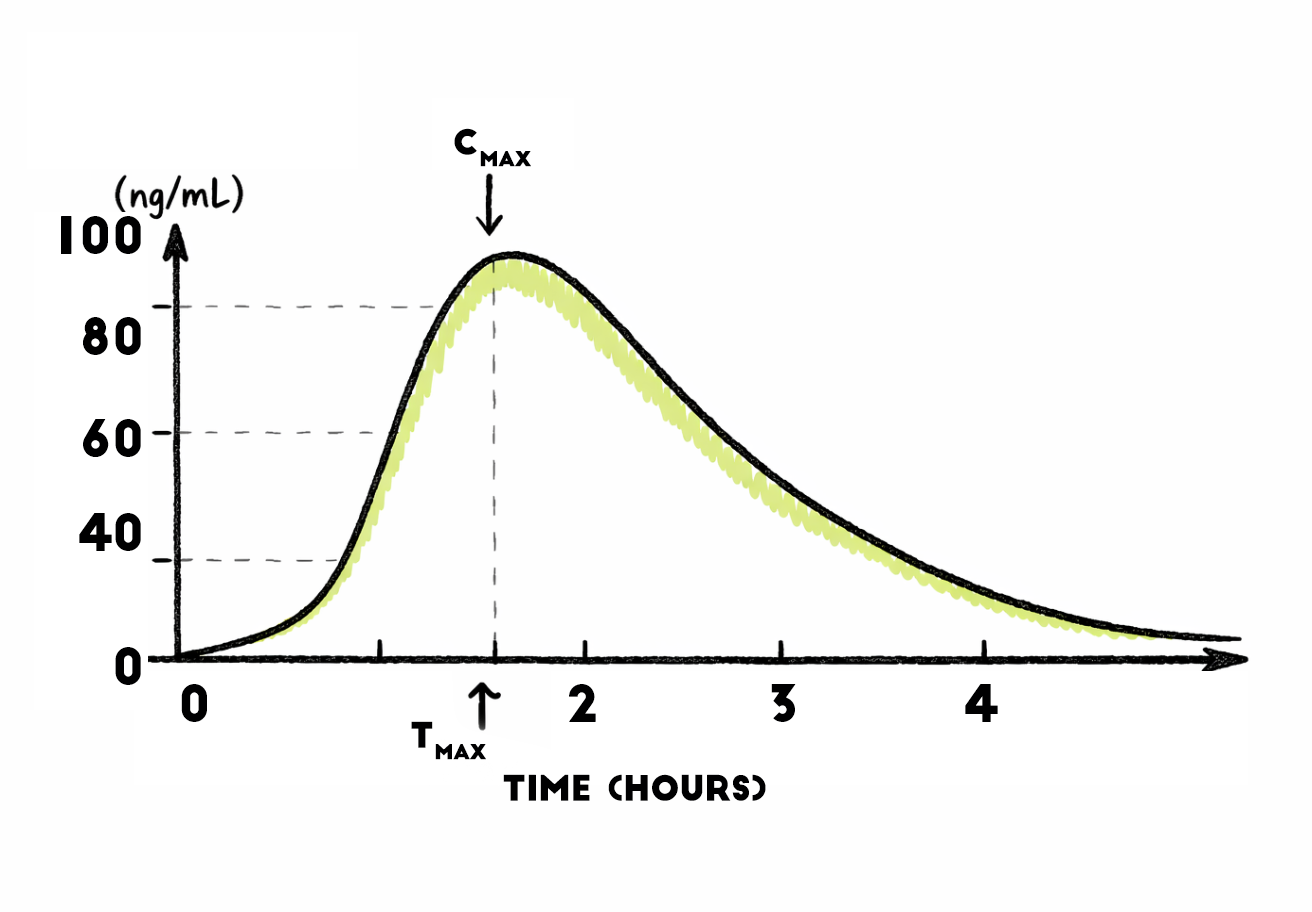
Pharmacokinetics (PK) indicates what the body does to a drug. It focuses on the drug’s mechanical processes through absorption, distribution, metabolism, and excretion (ADME). Taking THC-infused gummy as an example, PK is the objective map of THC molecule’s journey in our body. It tracks how quickly THC enters the bloodstream, how fast the concentration increases (ramp), when the concentration would peak (Tmax), how high the concentration reaches (Cmax), how long it stays there (duration), and how fast it decays (off-ramp). In a simple term, PK is roughly a bell curve of drug concentration over time.
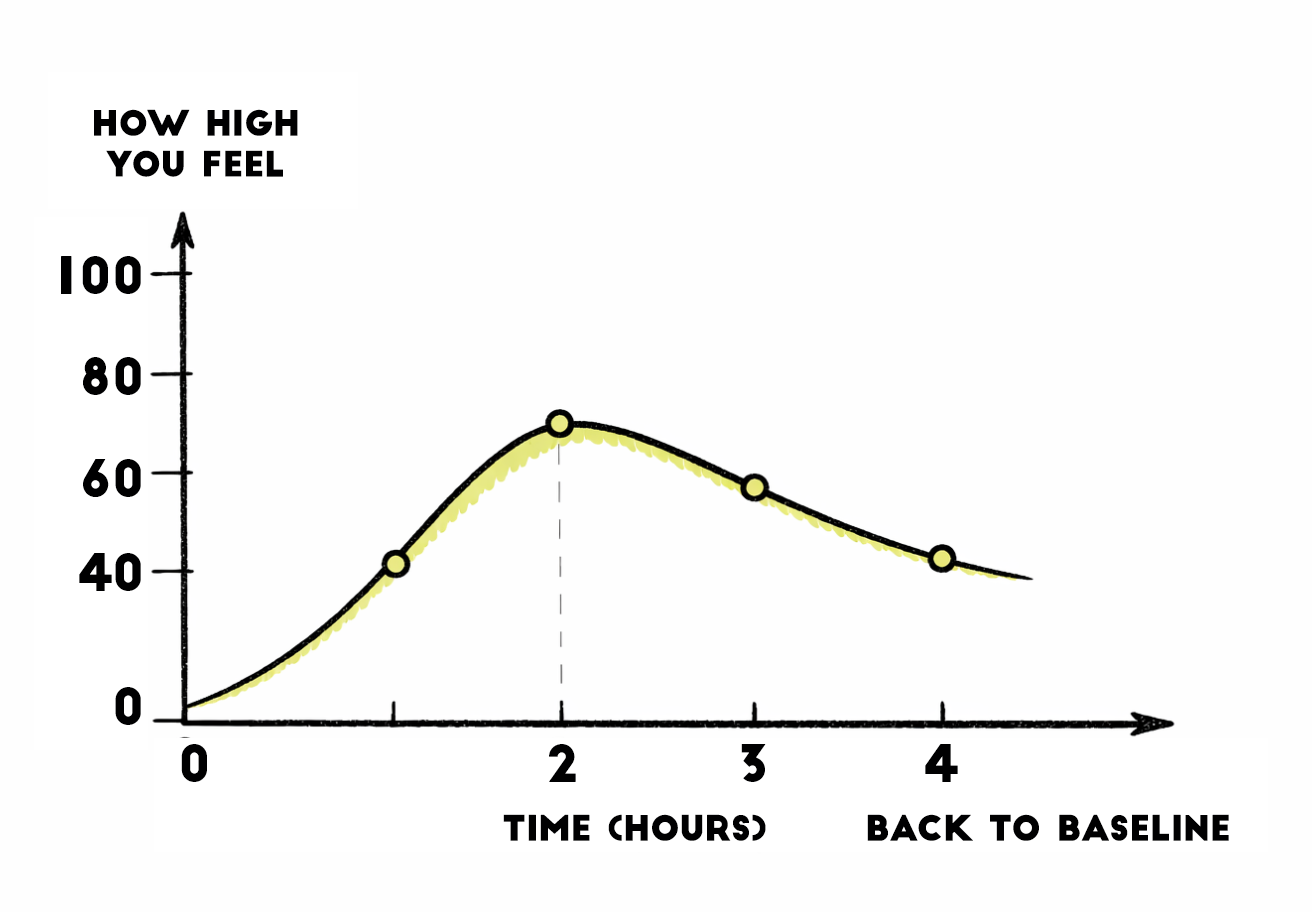
Pharmacodynamics (PD) is what the drug does to the body. In traditional pharma, PD measures how a drug improves the target symptom, such as pain reduction. In the recreational cannabis space, PD measures users’ psychoactive shift and how the consumer feels during the experience. What is the onset time? How fast does the intensity shift or grow? How intense is the effect? How long does the effect last? Does the user feel anxious, or do they feel pleasant? Do they feel uplifting or sedating? Do they enjoy the overall experience? PD not only captures the psychoactive intensity but also mood shifts and the side effects.
How are PK and PD measured?
We measure PK with hard chemistry and PD with the human experience.
To conduct a basic PK study on a THC gummy, a sample size of 6 to 20 participants is often enough to paint a clear, objective picture. In our PK study, we compared a Vertosa emulsion-infused gummy with a distillate-infused gummy.
Our 6 participants arrived at a certified research lab on an empty stomach and consumed a 15 mg THC gummy without knowing the infusion method. The other type of gummy was tested on a different day 1 week after. Over the course of 8 hours, certified phlebotomists drew blood at precise intervals: 5, 10, 15, 30, 45, 60, 90, 120, 180, 270, 360, and 450 minutes. We strictly controlled their food, offering them exactly the same pizza and salad at the 120-minute mark to control for total fat and calories. Because food intake impacts the absorption of fat-solution molecules like THC. Using High-Performance Liquid Chromatography (HPLC), we quantified the exact concentration of THC and its potent liver metabolites, 11-OH-THC & THC-COOH, at every time point. More details can be found in my previous article.
PD, however, is highly subjective. Because the mental state and physiology could have big swings interpersonally and intrapersonally, a larger cohort of at least 20 to 30 participants is needed to get a trusted outcome. We follow the similar restricted control on time & food. Participants are given the gummy to be tested and and use established drug effect questionnaires at different time points to ask: From 0 (not at all) to 100 (Extremely), how high do you feel right now, do you feel a pleasant drug effect, do you feel sick and so on. It is highly suggested to use the exact instrument without any alteration, which makes the cross-comparision valid and trusted. This is critical if we want to publish the PD data in the peer reviewed channel.
The relationship between PK and PD
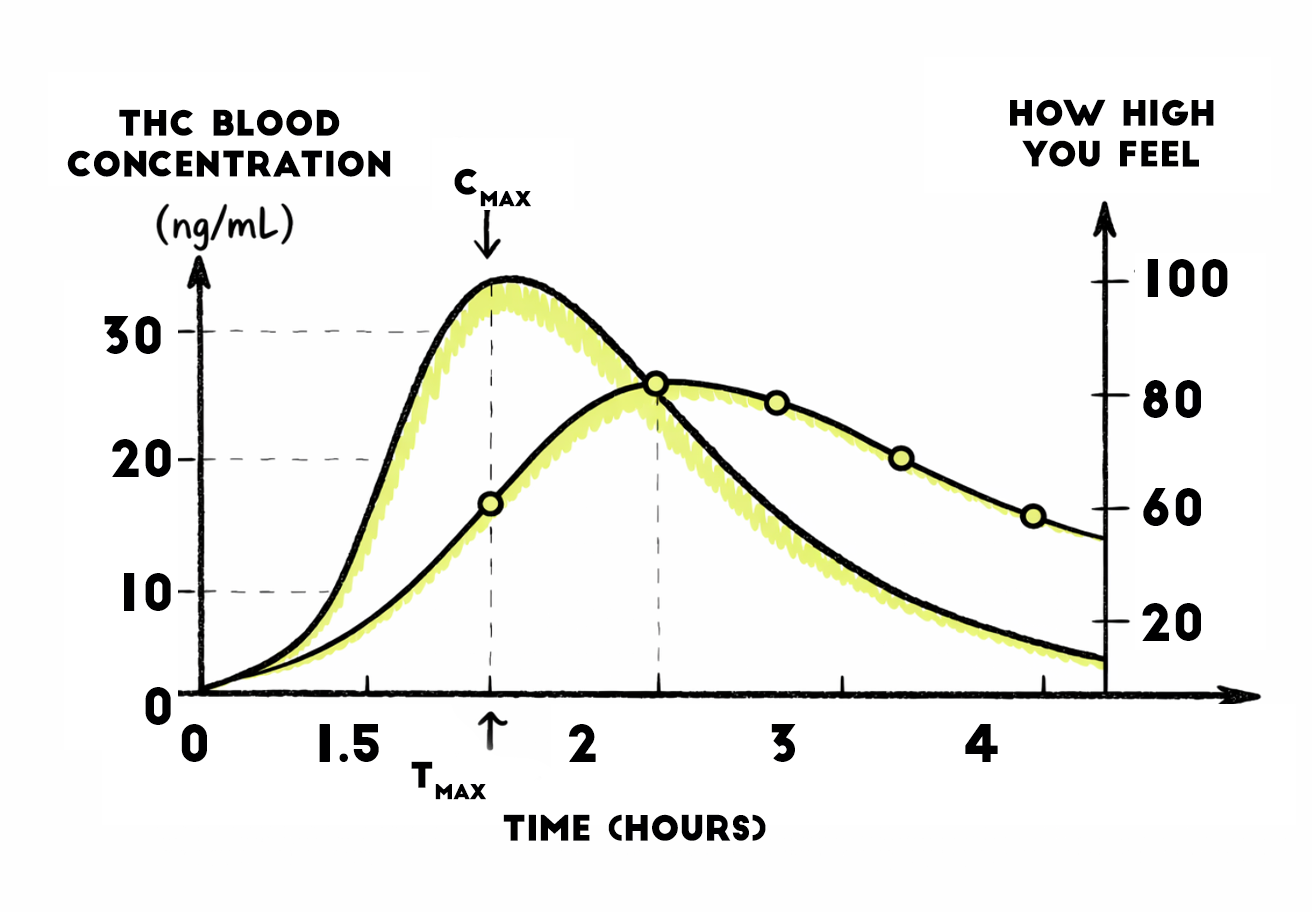
PK and PD do not perfectly mirror each other in real-time, which can be difficult to understand. There is a temporal delay, a phenomenon known in pharmacology called hysteresis.
This delay phenomenon can be explained in the graph below: as the THC concentration in the blood reaches the peak, it is highly likely that the psychoactive effect is still climbing. When THC blood concentration starts to decay, the experience may have yet to peak. This delay happens because blood THC concentration measures what is circulating in the bloodstream, while the psychoactive effect depends on THC entering the brain, binding CB1 receptors, and sustaining downstream neural signaling. Those processes do not rise and fall at the exact same speed as blood levels. Another unique reason is that THC’s metabolite, 11-OH-THC, also offers a strong psychoactive effect, which prolongs the PD curve.
Why PK and PD are the holy grail for our industry
PK and PD not only measure efficacy, but also indicate consistency and safety of your products. How variable is your formulation’s effect when delivered across different individuals? How reliable is the onset, peak, and duration? Can you consistently deliver the same experience, or does it fluctuate widely? Those questions directly define product quality, consumer trust, and ultimately brand success.
In addition to verifying product quality, PK and PD are the foundation for customized experience design. The infused category is no longer just about pursuing a THC high. Today’s products combine THC with CBD, CBN, CBG, CBC, terpenes, all with varying potency levels, allowing each formulation to deliver a unique experience. The question is no longer “does it get you high?”, but rather “what experience is this product intended to deliver?”. How likely are consumers to actually feel that intended effect? What social activities couple well with those effects? What are the side effects? Can we minimize discomfort while maximizing enjoyment? These are the core questions of modern product innovation. As every formulation becomes its own experience design, PK and PD become the most powerful tools for us to measure, refine and validate those experiences.
Conducting PK and PD studies requires meaningful investment, and this is where the industry is heading. In an upcoming article I will share the current state of PK and PD execution in our industry, highlighting who is leading the charge and how we can collaborate to move the entire space forward.
Stay tuned!
Dr. Harold Han — the “Happy Chemist” — combines his storied background in emulsion chemistry and science with curiosity and fascination in the rapidly growing cannabis industry. Developing nano and micro emulsions his entire career, Harold holds a Ph.D in Surface Chemistry from NYU and is the holder of multiple patents for his inventions in emulsion chemistry.
As the Chief Science Officer at Vertosa, Harold spearheads the company’s development of industry-leading and customized active ingredients for infused product makers, offering pre-suspended aqueous solutions to create incredibly homogenous and stable products while maximizing bioavailability, clarity, and taste.
To learn more about the science of cannabis, make sure to follow Harold on LinkedIn and check out his Happy Chemist videos.